

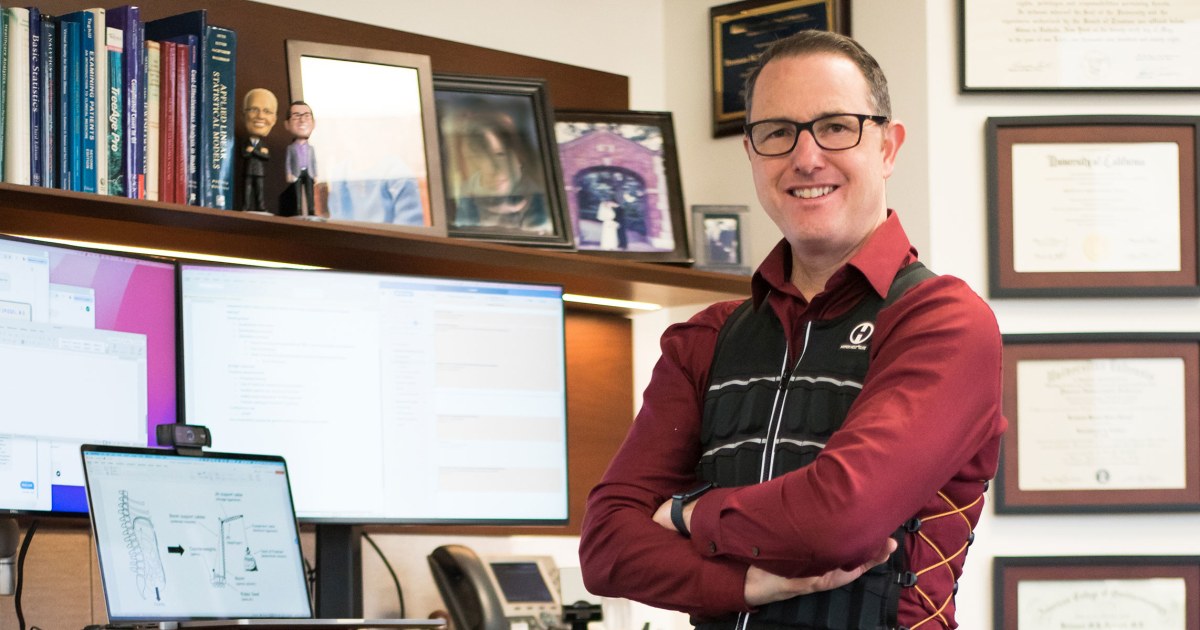
Doctors know the importance of losing extra weight, but Dr. Brennan Spiegel voluntarily spends part of his day being overweight by 60 pounds to boost his health.
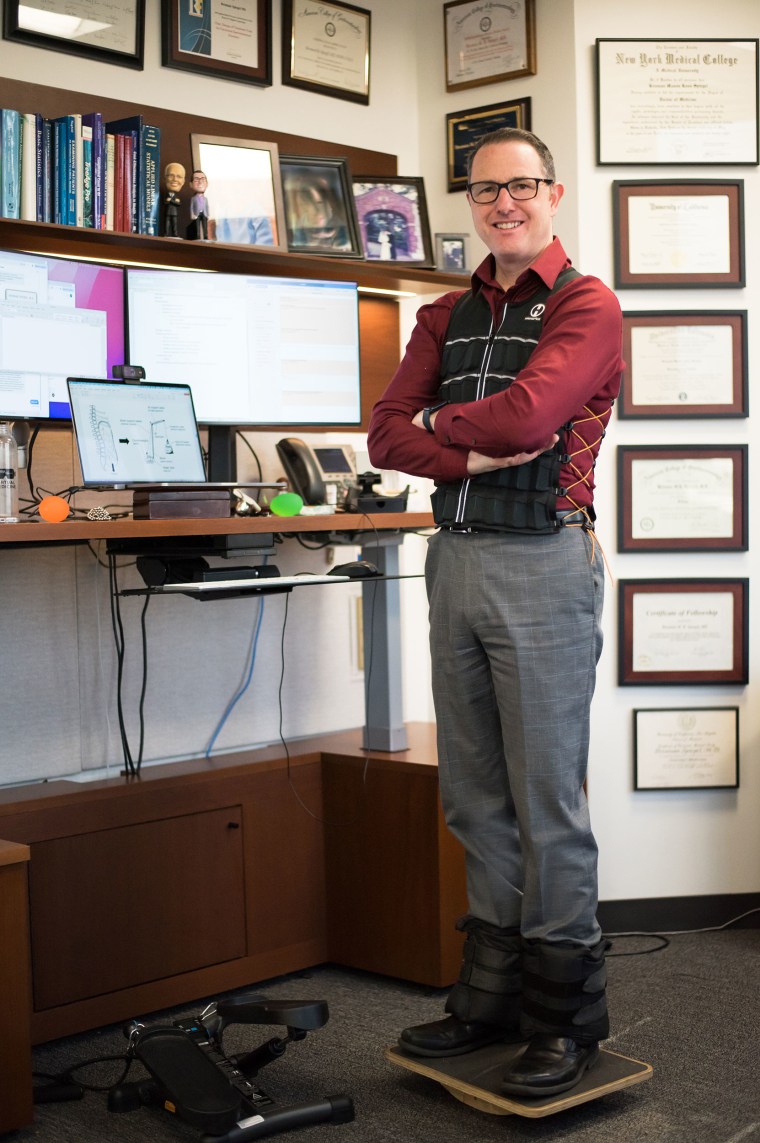
Spiegel wears a 20-pound weighted vest and 20-pound weights on each ankle at work — except when he’s meeting with patients because “that looks a little unusual,” he says.
“But when I’m in my office, I continuously wear them. So on certain days, I might wear them for five hours,” Spiegel, a gastroenterologist and professor of medicine at Cedars-Sinai in Los Angeles, tells TODAY.com.
“The idea is when I take the weights off and I go about my day, I have a certain resilience that’s built into my body because I’ve been practicing life on a larger planet — a planet with greater pull, which makes it a little easier to manage this planet.”
Spiegel initially tried the experiment for two months for his new book, “Pull: How Gravity Shapes Your Body, Steadies the Mind, and Guides Our Health,” but found the effects so “profound” that he kept going.
Since starting this routine, Spiegel feels stronger and faster, has improved his cardiovascular health and lost weight — “an unexpected bonus,” he notes.
The doctor believes many chronic conditions like lower back pain, leg swelling, dizziness — even irritable bowel syndrome (IBS) — are rooted in “gravity intolerance,” he writes. There’s a link to mental health, too, he says.

Here are six suggestions from the book about boosting your gravity resilience and improving your health:
Try a Weighted Vest
The weighted vest is “a very potent way of passively exercising” — it’s low grade, non-intense activity that puts tension on the muscles and the interior of the body, helping a person to become “zipped up” from the inside out, Spiegel says.
“It’s not always just about the muscles — it’s how the muscles connect to the tendons, to the bones and even to the organs,” he notes.
The weighted vest keeps the body engaged throughout the day, not just during a dedicated exercise session. A weighted vest can add even more benefits to walking.
Before trying one, talk to your doctor to make sure your body can tolerate it. Start light, for short durations and build from there.
Spiegel amplifies the effect with ankle weights. He also uses a standing desk to boost muscle activity, and a balance board to engage his core so that his body is constantly active. A mini stepper at his desk even helps him train for a marathon.
Go Upside Down
Yoga inversions like headstand, shoulder stand and downward dog place the head below the heart, “increasing blood flow to the brain, which can enhance mental clarity and concentration,” Spiegel writes in his book.
“It’s important to refill the brain. We drain the brain all day,” he says.
In general, the human body is quite capable of being upside down in healthy people, but talk with your doctor if you have high blood pressure or glaucoma, Spiegel advises.
Stand Up Straight
The heavy abdominal organs are like carrying a sack of potatoes in your belly for a lifetime, Spiegel notes.
Good posture is critical because the spine is like a chassis that holds up the whole structure: If you’re standing up straight, suspension systems in the belly also rise, almost like a marionette on strings, keeping organs in their proper position, he says.
“But if you’re hunched over — if you have a curved back, a weak back, abdominal obesity — it literally compresses the intestinal system, even if it’s just slightly,” Spiegel notes.
“This will start to change the ability of the intestine to move smoothly. And then you get bacterial overgrowth and gas formation and bloating and diarrhea and constipation.”
Ask yourself: Is the “sack of potatoes” in your gut well-supported right now or drooping?
Get Plenty of Sleep
The body fights gravity all day long, but at night, its horizontal position during sleep allows for better circulation to the head, Spiegel says.
“One argument is that by literally lying flat at night, we’re able to get the blood and oxygen back up into our brain effortlessly without constantly having to pump against gravity, which helps with cognitive function,” he notes.
Eat a Diet to Help Your Body Make Serotonin
Most people think of serotonin as a happy chemical in the brain, but Spiegel also describes the neurotransmitter as our “gravity management substance” in his book.
Serotonin helps prime the body’s pumps, tubes and hydraulic systems that evolved to allow us to stand up and stay alive, he says. It helps contract the heart and primes the strength of the muscles. It also aids lymphatic flow and intestinal movement.
“Without serotonin, you and I would be a flaccid sack on the ground right now, barely able to talk to each other,” Spiegel theorizes.
About 95% of the body’s serotonin comes from the microbiome in the gut, he says. To promote its production, Spiegel recommends a diet rich in tryptophan, which the body uses to make serotonin.
Foods include salmon, seeds, turkey, avocado, chicken, chickpeas, kidney beans, tofu, eggs and nuts. You might remember them with the acronym “STACK TEN.”
Polyphenols found in turmeric, green tea and cocoa also help drive serotonin production, as does exercise and sunlight, Spiegel adds.
Try Dead Hangs
This viral exercise has been described as a “miracle move” for posture and spinal decompression.
It involves hanging from a horizontal bar with arms fully extended and feet off the ground, stretching everything out, straightening the spine and opening up its discs.
Dead hangs build grip strength, a measure of general body strength and a strong predictor of survival, particularly in older people, Spiegel says.
“The longer you can do it, the better it is for your health and even your longevity,” he notes.
link