


For a long time, the same word has been used to describe women decades apart in age: Geriatric.
Its definition refers to the care of elderly adults. When most people hear the word, they first picture someone well into their 60s or older. However, in maternal medicine, a ‘geriatric pregnancy’ refers to a woman who is 35 or older.
As more women give birth later in life, clinicians and patients say the terminology has grown outdated.
“I don’t feel geriatric,” Lindsay Sparks said, laughing a little while bouncing her youngest in her lap.
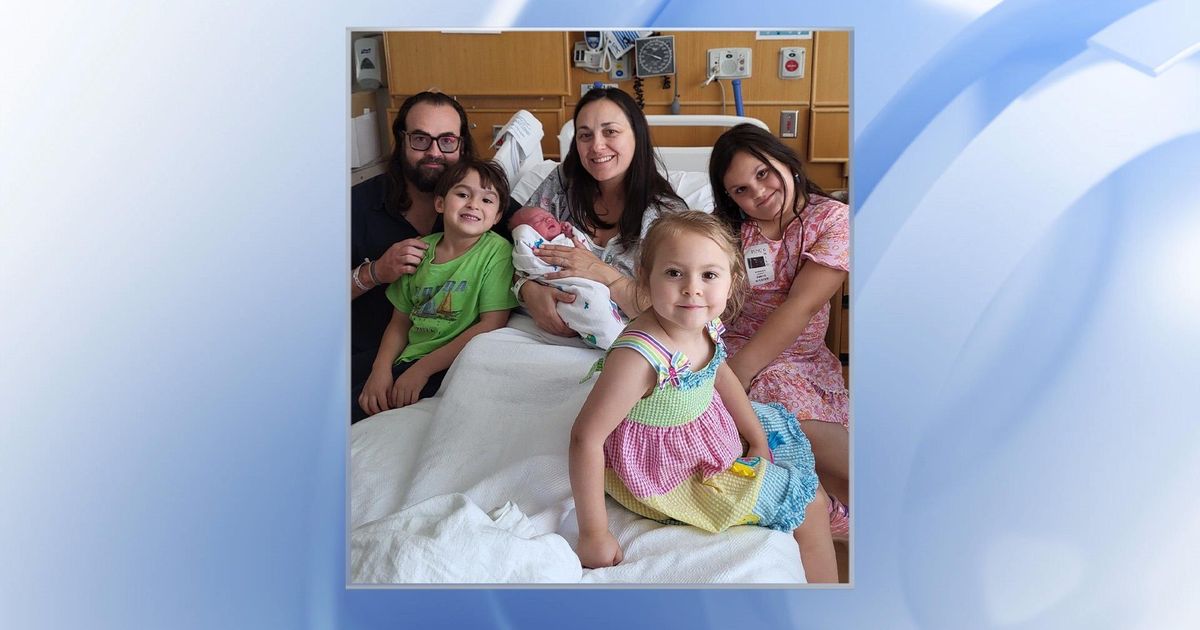
Sparks recently welcomed her fourth child, Maeve, into the world last fall. She gave birth just after midnight on her 43rd birthday. Surprisingly, Maeve is the second child to share the same birthday as their mother.
“There’s never a quiet or dull moment in our house,” Sparks said.
Aside from her oldest child, now aged 10, Sparks shared her other births were all after the age of 35.
Sparks said she remembers first hearing the term ‘geriatric pregnancy’ when she was in her upper 30s.
“I think it was probably with her birth that I heard geriatric pregnancy,” Sparks said, pointing to Tessa, her 4-year-old. “I probably saw it somewhere more than somebody actually talked to me about it.”
Instead, Sparks shared she remembers being labeled as ‘advanced maternal age.’ She stated she never thought much about her age during most of her pregnancies, but noted it was discussed more frequently with her most recent experience.
“With this one, it came up all the time,” Sparks said while motioning to her youngest.
At 42, Sparks said her doctors made her aware she was at increased risk for placental abruption. She underwent multiple stress tests as she approached her due date to ensure her pregnancy was progressing safely.
“I had them before, but I had them a lot with her just because of my age. That was the only factor that made a difference,” Sparks said.
Sparks’ experience reflects a broader shift in how pregnancy later in life is approached and discussed.
“The first thing I’ll say is we in obstetrics have moved away from the term geriatric pregnancy,” shared Dr. Devya Mallampati. “It’s obviously very marginalizing, it’s a little bit of an ageist term.”
Mallampati, an obstetrics and maternal-fetal medicine physician with UNC Health, specializes in high-risk pregnancies.
She explained that labels, like advanced maternal age, help clinicians identify women who are at heightened risk for various pregnancy-related conditions and complications.
“Things like miscarriages, preeclampsia — which is high blood pressure in pregnancy — developing diabetes in pregnancy, needing a C-section for delivery, experiencing an event at the time of delivery that might affect their short- or long-term health, and at times, death,” Mallampati said.
The physician also cautioned pregnancies after the age of 35 carry increased fetal risks.
She continued, “Women who have pregnancies after the age of 35 are at a higher risk of growth restrictions – babies not growing the way that we expect them to grow. They’re at a risk of preterm delivery. They’re at a risk of being admitted to a neonatal intensive care unit.”
Children born to women later in life are also more likely to have a genetic disorder, particularly chromosomal abnormalities, including Down syndrome.The CDC reports more women are waiting longer to have children.
Between 2016-2023, birth data shows the percentage of mothers having their first child before age 25 dropped 26%. The same timeframe saw first births to women aged 35 or older increase 25%, according to the health agency.
Along with a growing, aging maternal population and broader societal changes, Mallampati said technology and medical advancements have aided in the shift away from outdated terminology.
“We have gotten much better at treating a lot of the complications that people who are older might experience. We have a little bit more of a refined understanding of preeclampsia and gestational diabetes. Our testing in pregnancy of the fetus and their genetic risk is a little bit better,” she noted.
When asked how often her patients bring up their age in regard to pregnancy concerns, Mallampati replied, “All of the time.” However, she emphasized that age is just one piece of determining a woman’s pregnancy risks.
“I always tell my patients, ‘Nothing happened on the night of your 35th birthday. You didn’t automatically become the highest risk pregnant patient,’” Mallampati explained. “What we do know is it’s a spectrum. 35 is different from when you were 25, and that’s going to be different in your 40s.”
Mallampati further shared that stressors and other health conditions can make someone in their 20s a higher-risk pregnancy than someone in their 40s.
“If someone does want to have childbearing at a later age, I really try to support that in mothers who are younger but see that on the horizon. On the other end of the spectrum, when I see patients who are 43 and say, ‘I know I’m at a really high risk,’ I try to normalize for them that again, we can keep you safe during pregnancy and make sure your outcomes are as best as they can be,” said Mallampati. “I never want someone to not feel like pregnancy isn’t a joyful and wonderful experience, but I also want them to be very sober about some of the realities.”
The physician said the best way to know your risk is to speak with your healthcare provider about your pregnancy plans.
She added, “If you’re 38, you haven’t had other pregnancies, but you don’t have other medical issues – that’s fine, your risk is moderate. If you are 38 and you have diabetes, or you have a higher BMI, then that helps me adjust the risk and what our plan has to be to keep her and the baby safe during pregnancy.”
Both Sparks and Mallampati agree that the trend of having children later in life is likely to continue. Mallampati noted terminology will likely change with it, yet again.
“I think we’ll see it change as we get more data and more information on what risk looks like in each age,” the doctor shared.
Sparks encouraged other women to remember, ‘age is a number’ and ‘a term is a term.’ “The medical community has to draw a line somewhere to differentiate patients,” she said.
Sparks added, “Try not to think about the terms. Think about the cutie that you get at the end of the process.”
link